


Learning and Development at Fairholme Kindy
The Queensland Kindergarten Learning Guidelines underpin the programming and planning of our programs at Fairholme Kindy.
Experienced, highly qualified, early childhood trained educators working within well-resourced and purpose-built indoor and outdoor play spaces plan the program incorporating the five learning and development areas of:
- Identity
- Connectedness
- Wellbeing
- Active Learning
- Communicating.
Through play, intentional teaching, real-life engagements and routines and transitions, the children are involved in a wide variety of open ended activities that provide a solid foundation for future success. Fairholme Kindy embraces the vision that all children experience learning that is engaging and builds success for life (Early Years Learning Framework).
Our Kindy Teachers’ plans are informed by their understanding of children’s prior learning, strengths, interests and ideas, and their judgments about children’s current learning. Environments are set up to foster curiosity, exploration, and discovery, both indoors and outdoors. The children are encouraged to engage in a variety of types of play within these learning environments. Their play interests and involvement in play situations offer many teachable moments that will be extended and supported by the educators.
Kindy Curriculum
Literacy
Literacy experiences occur on a daily basis throughout the entire program through:
- stories read, told and dramatised
- language experiences
- building on symbolic awareness of language
- drawing and writing experiences
- modelling the use and purpose of literacy.
Numeracy
Daily experiences offer endless opportunities for exploring and using numeracy through:
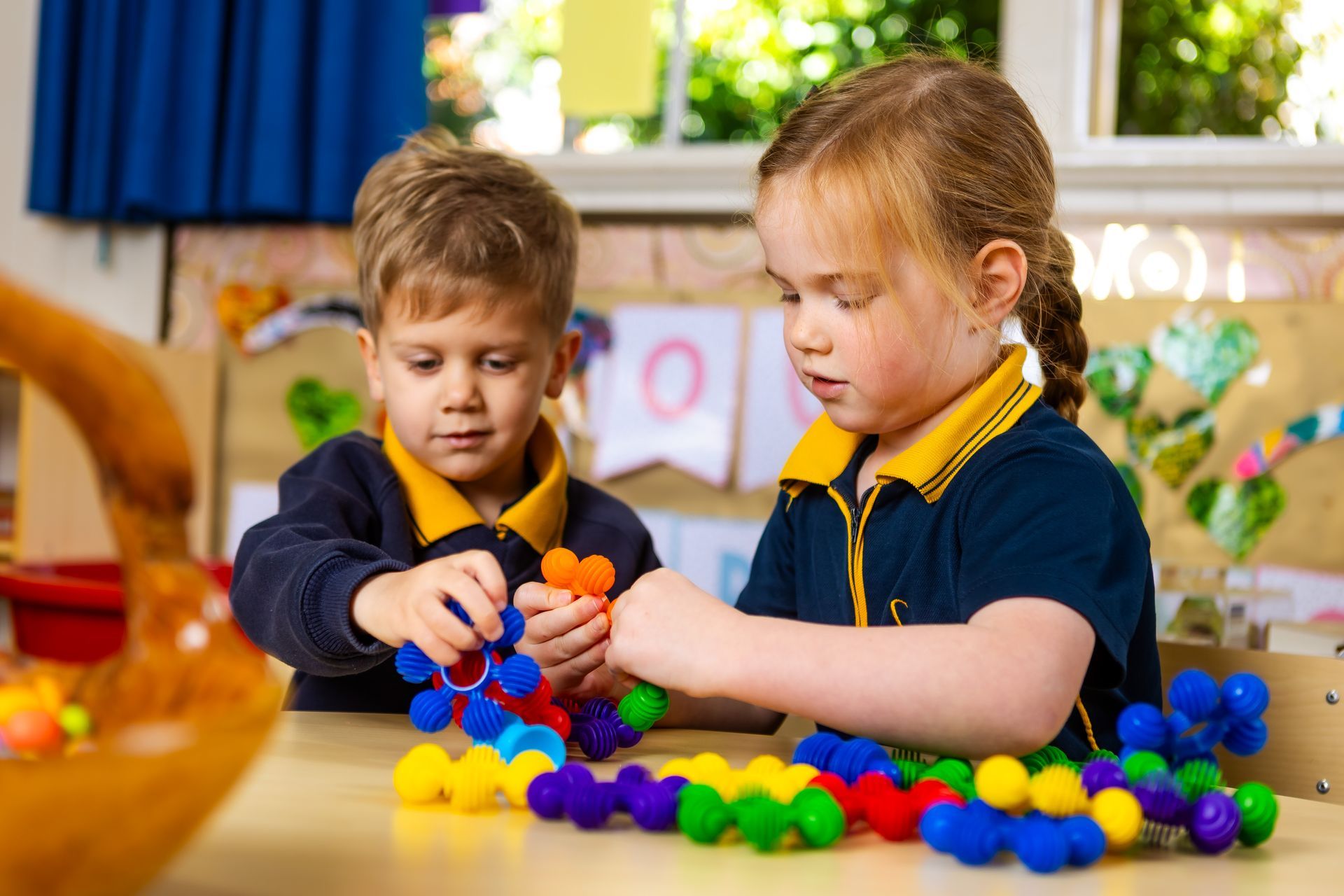
- block play, constructing, games, songs, rhymes, puzzles, sand and water play
- exploring mathematical thinking, concepts and mathematical language
- sorting, classifying, estimating, patterning and counting.
Science
Science opportunities are based on children’s existing and current knowledge, and extend and build on their interests through:
- multi‐sensory experiences
- predicting, hypothesising, exploring, investigating and manipulating
- gardening, sustainability and exploring the natural environment
- working with tools and technology
- museum resources, kits, books and posters to extend the children’s science understandings.
Creative Experiences
Being engaged in creative experiences allows the children to interpret and communicate their understandings of the world.
It caters for differences in development and skills, and provides opportunities for enjoyable sensory play through:
- open‐ended experiences
- 2D and 3D collage, painting, dough, clay, carpentry, drawing and blocks
- music, movement and dance.